Why Gen Z's Physical Media Comeback Is a Marketing Story, Not a Fashion Trend
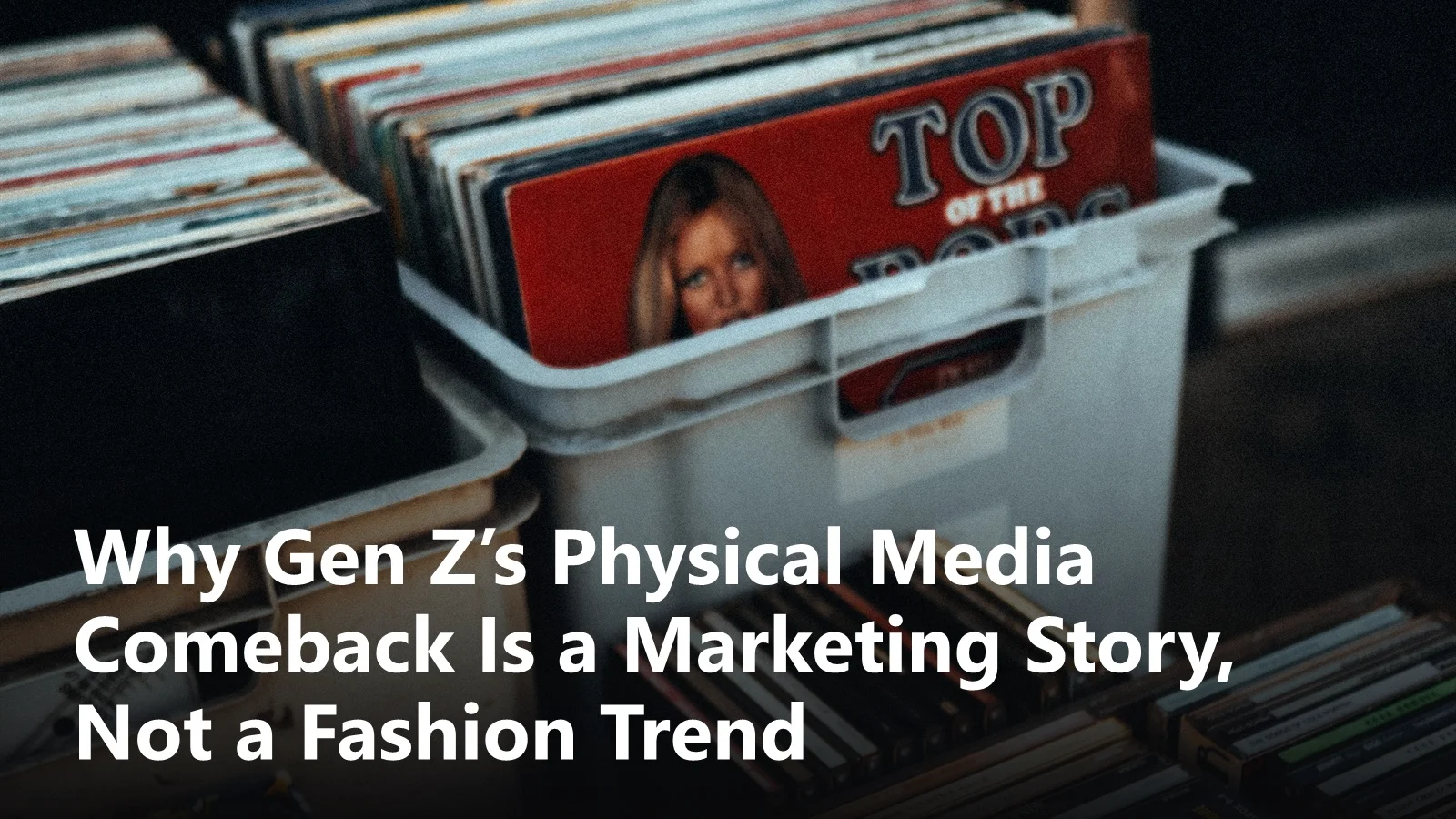
Gen Z is the first generation to grow up with digital platforms woven into everyday life: streaming instead of record shelves, feeds instead of magazine racks, and camera rolls instead of printed photographs. This makes it striking that this is also the generation driving a real resurgence in physical formats. US vinyl revenue crossed $1 billion in 2025 for the first time since 1983, according to the RIAA's year-end report, marking the format's 19th consecutive year of growth — alongside a parallel, widely reported resurgence in disposable and film cameras that multiple industry outlets have tied specifically to Gen Z buyers. The easy explanation for all of this is nostalgia: young people romanticising an era many of them never personally experienced. The more useful explanation, especially for marketers, is that this has less to do with nostalgia and more to do with what digital life no longer gives people. Brands that file this under “cute Gen Z trend” are going to miss what it's actually signalling.
What Is the Physical Media Comeback, exactly?
The physical media comeback refers to a measurable rise in interest among younger, digitally raised consumers in tangible formats such as vinyl records, CDs, printed photographs, film cameras and magazines, despite cheaper and faster digital alternatives being available for most of them.
Why Ownership Still Means Something When Everything Is Accessible
Digital access and ownership aren't the same thing, and Gen Z has had more reason than any prior generation to notice the gap. A streaming library can reshuffle overnight; a platform can change its terms, bury a feature, or disappear a piece of content without warning. A physical object doesn't change in quite the same way: a record on a shelf is still exactly where you left it in five years, which is a strange kind of stability to crave when almost everything else in a person's digital life is built to update, expire or scroll away.
That stability also creates a sense of identity that a stream count never quite captures. The RIAA's 2025 year-end report found that vinyl revenue in the US surpassed $1 billion for the first time since 1983, extending the format's growth streak to 19 consecutive years. A physical album signals fandom and taste in a way a Spotify play never will; a stack of printed photos becomes part of a room rather than an entry in a camera roll nobody revisits. The object isn't just used; it's displayed, kept and sometimes given an entire shelf or wall of its own. That's a meaningfully different relationship than the one most digital product are designed to create, and it's exactly the kind of relationship brands spend enormous budgets trying to manufacture through content alone.

Why Nostalgia Marketing Works Differently on Gen Z
Nostalgia marketing usually gets framed as something aimed at older consumers remembering their own childhoods. Gen Z complicates that framing, because plenty of them are drawn to formats and eras they never personally experienced, absorbed instead through older siblings, parents, or algorithmic exposure to decades of pop culture compressed into an endless scroll. A 2026 Vevo survey of nearly 2,000 Gen Z, Millennial and Gen X consumers found that 65% of Gen Z respondents report feeling nostalgic for cultural moments from before they were born, what the researchers termed “borrowed nostalgia”, and one in three said they feel like they were born in the wrong generation. These are survey findings, not figures for every Gen Z consumer.
The appeal usually isn't "I remember this." It's closer to "this feels different from everything else I see today." That distinction matters for anyone planning a campaign around it: nostalgia on its own creates familiarity, but what makes that familiarity land with a younger audience is novelty, not the sense of reliving a memory that was never theirs to begin with.

The Real Opportunity Isn't Physical vs. Digital — It's Physical Feeding Digital
The least useful response to this trend is treating it as a reason to abandon digital marketing in favour of printed catalogues and vinyl drops. The more interesting response is noticing how naturally physical objects can feed digital attention rather than compete with it. That could mean a limited-edition object worth unboxing on camera, a printed piece with a QR code leading somewhere genuinely worth the detour, or a collectable that becomes the reason a creator makes a video in the first place, rather than a prop dropped into one they'd have made anyway.
This is exactly where the trend becomes a creator story more than a culture story. A product that exists only as a digital SKU gives a creator one angle to work with: showing it, describing it, maybe demonstrating it. A physical object gives them several: the unboxing, the texture, the packaging, the decision to keep it or display it, the reason someone would want it at all. Physical objects can give creators a richer set of content angles than a standard digital-only product placement or seeding deal, which helps explain why limited drops, printed zines and physical collectables can become such effective content hooks.
The Trap: Manufacturing a Trend Instead of Reading the Behaviour
None of this means every brand should rush to press a vinyl record, print a magazine, or ship a collectable just because physical media is having a moment. Consumers are good at spotting a trend that's been bolted onto a brand rather than genuinely built around it, and a hastily produced physical object with no real reason to exist will come across as exactly that — a marketing stunt wearing the aesthetic of authenticity.
The stronger starting point is the underlying behaviour, not the format. Would someone actually want to keep this, or does it just look good in a single photo? Does the physical version add something the digital one genuinely can't: texture, permanence, display value, a story worth telling? Would a creator naturally find a way to use it, or would it need to be forced into content that doesn't really need it? If the honest answer trends toward no, making something physical because physical is trending won't solve whatever problem a brand is actually trying to fix.
What This Means for How Brands Build Campaigns
The clearest lesson here isn't about vinyl, film cameras or any specific format; it's that convenience and emotional value aren't always the same thing for a generation raised with convenience as the default. Digital products often compete heavily on speed and ease. Physical experiences compete on something else: a stronger emotional signature, a sense of exclusivity when something is genuinely limited, and content that creators actually want to make because there's a real object, story or moment behind it, not just a product shot.
None of that requires brands to choose a side. The strongest version of this isn't physical instead of digital; it's physical as the spark that gives a digital campaign something worth talking about. A limited object becomes a video. A creator's unboxing becomes a conversation. A conversation becomes the kind of organic reach paid media can't simply manufacture.
The Bottom Line
It's tempting to file Gen Z's physical media comeback under nostalgia and move on. A more useful way to read it is as a response to a specific kind of digital fatigue: a generation that has access to nearly everything, instantly, and is choosing, in specific moments, to trade that convenience for something that feels more permanent and more theirs.
For brands and creators, the opportunity isn't choosing between physical and digital. It's using physical moments to give digital marketing something it's often missing: a real story, a real object, and a real reason for someone to care enough to make content about it unprompted.
Frequently asked questions
What is the physical media comeback?
The physical media comeback describes the renewed interest among younger consumers, particularly Gen Z, in tangible formats like vinyl records, CDs, printed photographs, film cameras and magazines, despite cheaper and more convenient digital alternatives already existing. The resurgence isn't limited to music: renewed interest in printed photography and analogue formats points to a broader appetite for physical experiences among younger consumers.
Why is Gen Z interested in physical media if digital is easier?
Physical formats offer a sense of ownership, permanence and identity that digital experiences often can't replicate; a physical object stays as it is over time, can be displayed or collected, and can signal taste and identity in a way a stream count or camera roll entry doesn't
Why does nostalgia marketing work on Gen Z if they didn't live through the original era?
For Gen Z, nostalgia can be about aesthetics and formats encountered indirectly, through family or online culture, rather than personal memory. The appeal tends to come from novelty, something that feels distinct from a constant digital feed more than from genuine remembrance.
Should every brand create a physical product because of this trend?
No. A physical product only works as marketing when it's built around a genuine reason to exist: something worth keeping, displaying or sharing. A physical object created only because the trend is popular tends to read as manufactured rather than authentic.
How can brands connect physical media trends to creator marketing?
By treating physical objects as creative opportunities (something worth unboxing, displaying or building a story around) rather than standalone products, brands give creators a richer, more specific reason to make content than a standard digital product placement would.
Is the physical media trend likely to last, or is it temporary?
Vinyl, film cameras and printed photos will likely keep shifting with culture. The broader behaviour is more durable: younger consumers continue to show real interest in tangibility, ownership and identity-driven objects, backed by several consecutive years of sales growth across formats like vinyl. Brands are better served paying attention to that behaviour than betting on any one format remaining trendy.
What counts as physical media in the Gen Z comeback?
Physical media typically includes tangible formats such as vinyl records, CDs, DVDs, printed photographs, magazines and physical books. The broader comeback also extends to adjacent physical experiences, including film photography and collectable objects, even though a camera itself is a device rather than a media format.
Can a digital-first brand use this trend without launching a physical product?
Yes. The behaviour behind the physical media comeback, valuing tangibility, permanence and identity, can inform packaging, merchandise, event design or creator collaborations without requiring a brand to manufacture and distribute a new physical product line.
More from Internet Culture