Nobody Googles Anymore: They Ask TikTok, Reddit or ChatGPT Instead
Nobody Googles Anymore: They Ask TikTok, Reddit or ChatGPT Instead
There was a time when having a question meant opening Google.
Want a restaurant recommendation? Google it.
Need to know whether a product is worth buying? Google it.
Looking for the best sunscreen? Google it.
Now, you might search TikTok instead. Or ask Reddit. Or type the entire question into ChatGPT and wait for an answer.
Google hasn't disappeared, of course. But something interesting has happened to how people search: search no longer happens in one place.
Which platform someone picks depends on the kind of answer they want. Google is still the default for direct information. TikTok works when you need to see the thing. People go to Reddit for others' experiences, and they use ChatGPT when a question is too tangled for a list of links.
Marketers call this social search, and it affects a lot more than where people type their queries.
What Is Social Search?
Social search is using social platforms to discover information instead of relying exclusively on traditional search engines.
The easiest example is probably food. Instead of searching Google for "best cafes in Bandra," someone might open Instagram and search "Bandra cafes" to see what the places actually look like. They might watch a few videos, check the comments and save the ones worth visiting.
People still search; they just start somewhere else. Social platforms aren't trying to be another Google. What they offer is recommendations, visuals and opinions from people who have already tried the thing, which is exactly what some searches call for.
Why Are People Searching on TikTok Instead of Google?
Part of the answer is that some questions are easier to answer visually.
If you're looking for a makeup tutorial, seeing someone actually apply the product can tell you more than reading five paragraphs about it. If you're choosing a restaurant, watching a short video can show you the food, ambience and portion sizes before you even leave home.
Adobe Express's 2026 research found that 49% of surveyed U.S. consumers had used TikTok search at least once, up from 41% in Adobe's 2024 survey. Among Gen Z respondents, 65% said they had used TikTok for search, though only 25% said they actually found it effective for locating information.
One note on where this data comes from: these are U.S. survey findings, not statistics about Indian consumers. TikTok has been blocked in India since 2020, so Indian users get the same kind of visual, experience-led discovery from Instagram and YouTube instead.
Among consumers surveyed, the most commonly cited reasons for turning to TikTok were its short-video format, storytelling and interactive experience, with video tutorials, product reviews and personal stories as the content people wanted most.
So people aren't picking TikTok because it holds better information than Google. Sometimes they just want to see what the answer looks like in real life.
This Isn't Exactly New
The "TikTok is becoming a search engine" conversation has been around for years.
Back in 2022, Google itself acknowledged that younger users were already changing how they searched. Google's Senior Vice President Prabhakar Raghavan said internal research showed that almost 40% of young people looking for a place to eat were turning to TikTok or Instagram rather than Google Search or Maps, a comment Google later confirmed referred to U.S. users aged 18–24.
That was the moment a lot of marketers started paying attention.
Four years on, though, the bigger story isn't that TikTok took some searches from Google. People now have several places to start a search.
Google, TikTok, Reddit and ChatGPT Don't Answer the Same Question
Imagine you're thinking about buying a new pair of running shoes.
You could Google the model and find specifications, reviews, retailer pages and comparisons. Then you might go to TikTok to see someone actually wearing them. Then you could search Reddit to find out whether runners who bought them six months ago still like them. And maybe you'd ask ChatGPT to compare the models based on your running style and budget.
That's one research trip spread over four platforms, not four competing searches, which is why "Google vs. TikTok" is a slightly misleading way to put it. People aren't always swapping one platform for another; they give each one a different job.
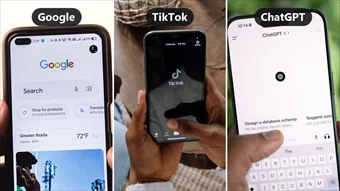
Do Gen Z Use Reddit as a Search Engine?
Increasingly, yes, particularly when they want opinions, experiences and discussion rather than a polished answer.
Reddit has an advantage that traditional search results sometimes struggle to replicate: people talking about what actually happened to them. Search "Is this laptop good?" and you’ll find dozens of reviews. Search Reddit, and you might find someone saying, "I bought this six months ago and here’s what started annoying me."
Adobe's 2026 data shows just how fragmented search is becoming: Google remained the platform consumers considered most useful for search at 85%, but Reddit followed at 29%, ahead of ChatGPT at 26%, YouTube at 24% and TikTok at 16%. That isn't Google disappearing; search is just spreading out.
What About ChatGPT?
ChatGPT changes the search experience in a slightly different way.
With Google, you’re generally given a collection of results and asked to decide which ones are useful. With ChatGPT, you can ask the question the way you’d ask another person: "I’m going to Mumbai for two days, I don’t like touristy places, and I have ₹5,000 to spend. What should I do?"
Then you can follow up.
"What if I only have one day?"
"What if I want more food than sightseeing?"
"Which of these would work if it’s raining?"
It feels like a conversation instead of a string of keyword searches, which is part of why AI belongs in this discussion. The shift isn't really from Google to TikTok. People now use Google, TikTok, Reddit, YouTube, ChatGPT and whichever other platform has the answer they trust.
Is Google Losing Search Share to Social Media?
The answer needs a little nuance.
There's clear evidence that social platforms are taking on search and discovery functions, particularly for younger audiences and certain types of queries. Google's own 2022 research acknowledged the shift, and Adobe's 2026 survey found that nearly half of surveyed U.S. consumers had used TikTok as a search engine.
That doesn't mean Google has stopped being the main place people search. In Adobe's 2026 survey, 85% of respondents said Google was the most helpful platform for search, compared with 16% for TikTok. The "nobody Googles anymore" line is deliberately provocative. What's really happening is that people are less loyal to a single search box and go wherever the answer seems most useful.
Why Does Social Search Feel More Useful Sometimes?
There's a trust element here too.
Imagine you’re searching for "best face wash for oily skin." A traditional search result might give you a list of products. A TikTok creator might show you their skin before and after using one. A Reddit user might tell you the product worked but caused dryness after three weeks.
Neither one automatically gives you the truth, but both give you context, and context is often what people want from a search. That's why social search suits recommendations, experiences and products: Adobe found that consumers using TikTok for search most commonly preferred tutorials, product reviews and personal stories. You get information with a point of view.
But There's a Problem with Searching Social Media
The same thing that makes social search attractive can also make it messy.
A Google result can at least give you a sense of where the information came from. On TikTok, you might be watching a confident creator who has no particular expertise in the subject; a video can look convincing without actually being accurate. And because social platforms are built around recommendation algorithms, the first answer you see isn't necessarily the most authoritative one. It's the one the platform thinks you'll watch.
That's why social search works best when users understand what kind of question they're asking. If you want someone's experience with a restaurant, Reddit or TikTok can be incredibly useful. If you want to check an official government rule, medical guidance or a technical specification, you probably want a more authoritative source.
The platform is where you look for the answer; it isn't the answer itself.
What Does This Mean for Brands?
This is where the search shift becomes a marketing problem.
For years, brands could think about discoverability primarily through the lens of Google: keywords, rankings, backlinks, technical SEO and content. Those things still matter. But if someone discovers a skincare brand through TikTok, checks Reddit before buying it and asks ChatGPT to compare it with three competitors, then ranking on Google is only one part of the discovery journey.
Brands now have to think about where their audience actually looks for information, which means creating content that works differently across platforms: an Instagram or TikTok video that demonstrates the product, a Reddit discussion built on genuine experience and useful detail, a website article that answers the search query comprehensively, and clear, structured information an AI system can understand and reference. Same brand, different discovery environments.

Social Search Doesn't Mean SEO Is Dead
This is probably the biggest misconception to avoid.
The rise of TikTok, Reddit and ChatGPT doesn't make Google irrelevant. It makes search more fragmented. A person might discover a product on TikTok and still Google the brand before buying it. They might read a Reddit thread and then visit the company's website. They might ask ChatGPT for a comparison and then click through to the sources; search journeys don't necessarily happen in a straight line anymore.
That's why traditional SEO and what's now being called answer engine optimisation (making sure the information a brand publishes is clear and structured enough for an AI tool to actually use it) aren't competing priorities. The more useful question for a brand manager isn't “SEO or social search?” It's: where does our audience begin its research, and what does it need at each stage?
What Social Search Means for Content Creators
There's a similar lesson for creators.
A piece of content doesn't always have to be designed purely to go viral. It can also be designed to answer something people are already looking for: "best cafes in South Mumbai," "is this foundation actually worth buying," "how to style wide-leg jeans," "best laptops for college students." Each of those is a search query that doubles as a content idea.
The difference is that the answer doesn't have to look like a traditional article. It could be a 30-second video, a Reddit comment, a carousel, a YouTube tutorial, or a creator explaining what they learned after actually using the product. The question stays the same and only the format changes.
Search probably won't come down to picking one engine. It will be about knowing which place to ask.
Frequently asked questions
Why are people searching on TikTok instead of Google?
People often use TikTok when they want visual, current or experience-based information. Tutorials, product reviews, personal stories and recommendations are particularly suited to the platform. Adobe's 2026 survey found that 49% of surveyed U.S. consumers had used TikTok as a search engine.
What is social search?
Social search is the practice of using social media platforms such as TikTok, Reddit, Instagram or YouTube to discover information, recommendations, products, places and answers instead of relying only on traditional search engines.
Do Gen Z use Reddit as a search engine?
Yes. Reddit is increasingly used by younger users to find first-hand experiences, opinions and community discussions. Adobe's 2026 survey found Reddit was considered useful for search by 29% of respondents overall, second only to Google at 85%.
Is Google losing search share to social media?
In Adobe's 2026 U.S. survey, Google remained the most widely regarded platform for search, while TikTok, Reddit, YouTube and ChatGPT occupied significant secondary roles. Social platforms are taking on more search and discovery activity, but current evidence does not show Google simply being replaced.
What is answer engine optimisation (AEO)?
Answer engine optimisation (AEO) is the practice of making content clear, accurate and well-structured so that AI-powered tools can understand it and potentially use it in their responses. It complements traditional SEO, which focuses on helping content appear in search engine results.
What does social search mean for brands?
It means brands need to think beyond traditional Google rankings. Being discoverable may involve creating searchable video content on Instagram, YouTube or TikTok, answering questions on Reddit, publishing useful YouTube videos, maintaining strong website content and making information clear enough to surface in AI-assisted search. The exact mix depends on where the brand's audience researches and what type of information they seek.