Do UGC Creators Need Followers? Here's What Brands Actually Look For
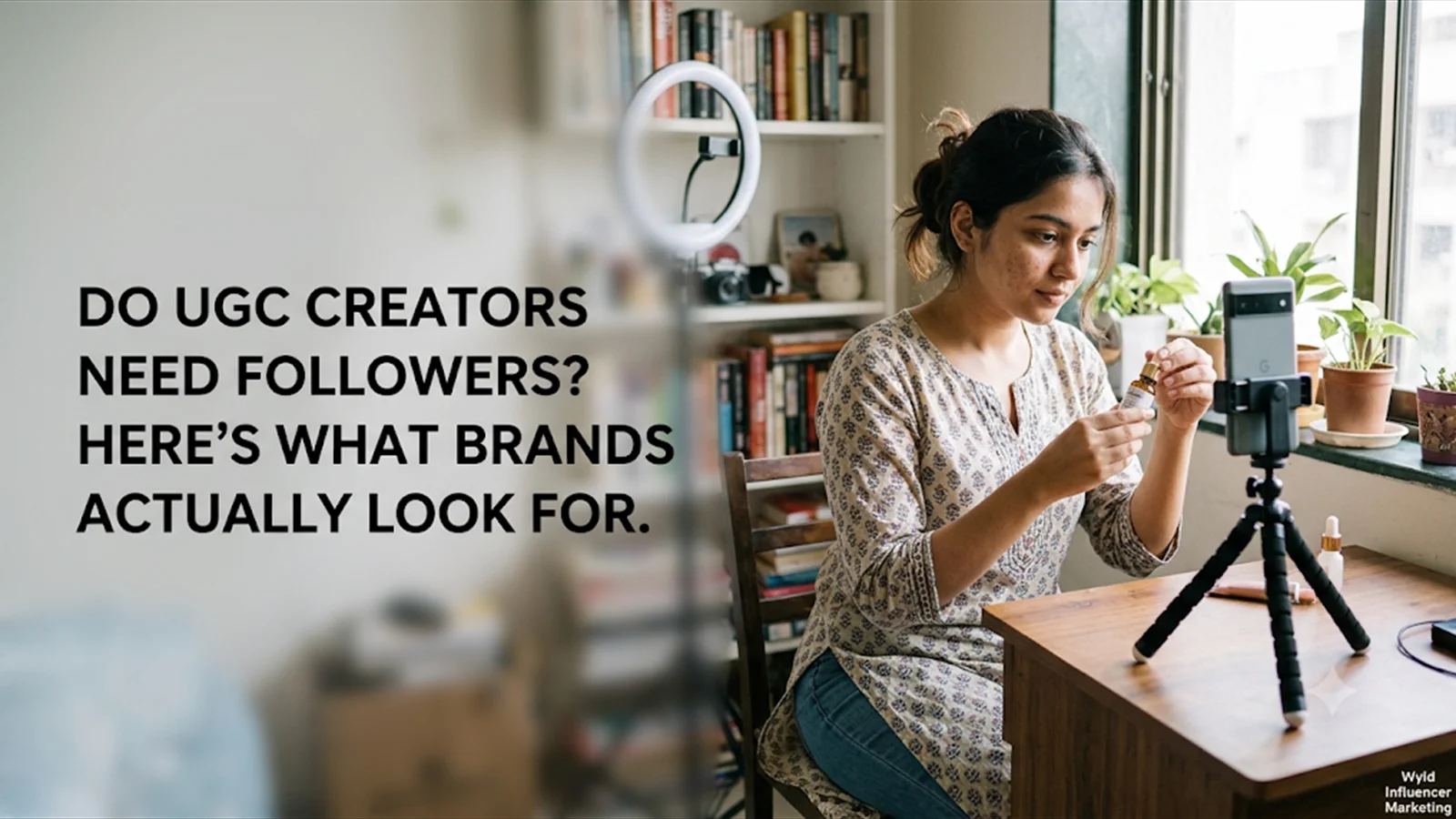
If you’ve looked at a UGC opportunity and thought “but I barely have any followers,” you’re not the only one. The reassuring part is that UGC and influencer marketing were never actually the same job. An influencer is generally hired for access to their audience. A UGC creator is primarily hired to produce content a brand can use, which changes what actually matters when a brand is deciding who to hire. Follower count tells you something about potential reach. It tells you nothing about whether someone can build a hook that holds attention, communicate a product like a real person instead of a script, make someone laugh, or turn an ordinary brief into something worth finishing. For UGC specifically, the content itself is usually the actual value being bought.

Do UGC Creators Need Followers?
No, not to get started. A brand can hire you because you can produce a convincing product demo, testimonial, unboxing, tutorial or lifestyle video, not because thousands of people already follow your account. In traditional influencer marketing, the audience is a major part of what’s being paid for. With UGC, the brand typically uses your content on its own channels, site, product pages or ad campaigns, depending on whatever usage rights are agreed. That’s why someone with 1,000 followers, or even a fairly new account, can genuinely land UGC work.
That said, not needing followers doesn’t make them irrelevant across the board. If a brand also wants you to publish the content to your own audience, your reach suddenly becomes part of the deliverable, not just a nice-to-have on your profile.
What Do Brands Look For Instead?
If follower count isn’t the main filter, brands need sharper ways to judge whether a creator’s actually worth hiring. Several signals can matter more than follower count alone.
Engagement, not just audience size
A creator with 5,000 followers and a genuinely responsive audience can be more interesting to a brand than one with 100,000 followers whose posts barely get a reaction. That doesn’t mean engagement rate alone should replace follower count as the new single metric either; it’s worth looking at engagement, views, and comment quality together, since a raw audience number says nothing about how attentive that audience actually is. There’s real research behind this instinct, too. A 2023 Journal of Marketing study by Simone Wies, Alexander Bleier and Alexander Edeling found that engagement with sponsored posts rises as an influencer’s follower count grows, then declines at higher follower counts unless other factors, such as more customized content, offset it. That doesn’t mean every large creator performs worse, and the study looks at influencer campaigns rather than UGC specifically, but it supports the point that audience size alone is a weak guide. So, the sharper question isn’t how many people follow a creator. It’s whether people actually respond to what they make.
Can they build a hook?
Nobody owes a UGC video their attention. A creator can have great lighting, clean editing and a perfectly written script, and if the first few seconds give someone no reason to keep watching, none of that production quality matters. Strong creators know how to build an entry point, an unusual opening, a witty line, real humour, a relatable moment, an unexpected way into the product, without needing to make every video loud or dramatic. The goal is simply making someone curious enough to stay a few seconds longer, and that’s a creative skill that followers can’t tell a brand anything about.

Can they avoid looking like everyone else?
UGC gets repetitive fast. One creator opens with “I didn’t know I needed this until I tried it.” Another leads with “POV: you finally found the solution.” A third starts with “If you’re struggling with...” Each of those can work in isolation. The problem shows up when an audience sees the same shape over and over, until they recognise the pattern before they’ve even registered what the product is, and they scroll past before the pitch has a chance to land. A creator who brings genuine variety, through humour, an unusual hook or an unexpected format, gives a campaign something another creator working from the same brief simply can’t. More creators on a campaign doesn’t automatically mean more creativity in it.
Creative freedom, not a word-for-word script
One of the more common mistakes a brand makes is handing a creator a script with every line already decided and then expecting the result to feel natural. A creator can’t bring much of their own personality to a video when every sentence, expression and transition has already been written for them. None of that means briefs should disappear; brands still need to cover the key claims, mandatory talking points and real boundaries. But there’s a real difference between giving someone a brief and giving them every word they’re allowed to say, and the stronger approach usually sits somewhere in between: the brand defines what needs to be communicated, the creator decides how they’d naturally say it.
A 2026 study published in the Journal of Retailing and Consumer Services, analysing 1.4 million Instagram posts, including roughly 200,000 sponsored posts, found that more formal language was associated with lower engagement, while informal language features such as netspeak and emojis were associated with higher engagement. Although the study examines sponsored influencer content rather than UGC alone, its findings reinforce a useful point for brands: controlling every word can make sponsored communication feel less natural. A creator’s own voice isn’t necessarily an obstacle to the brand’s message. It can be part of how that message gets through.

Does the creator actually fit the product?
A creator can be genuinely talented and still be the wrong choice for a specific campaign. Picture a teacher suddenly promoting something that has nothing to do with their usual content, their interests or the audience who follows them for teaching advice; the video could be beautifully shot, the script could be flawless, the creator’s engagement could be strong, and the whole partnership would still feel slightly off. That’s creator-product-audience fit at work, and it’s backed by a real body of influencer-marketing research linking product-influencer congruence to both advertising outcomes and how audiences evaluate the content. A smaller creator who genuinely fits the product can make more sense than a much larger creator who doesn’t; the goal was never to find someone right for every product. It’s finding someone right for this one.
Don’t choose polish over relevance
A beautiful feed is impressive, but it isn’t automatically persuasive. UGC was never a contest to find the most flawless profile on Instagram. A relatable creator whose personality fits the audience can outperform a highly polished one who feels disconnected from the product. Polish isn’t the problem; treating it as a stand-in for relevance is. Perfection earns a glance. Relevance gives that glance a reason to turn into actual attention.
Does their existing content build trust?
Even when a brand isn’t paying for a creator’s audience, that creator’s regular content still tells a brand a lot. How do they talk when nobody’s briefing them? What kind of humour do they use? How do they explain things, and what does their audience actually respond to? Do their sponsored posts still sound like the same person, or does a different personality show up the moment money’s involved? This matters because audiences build familiarity with a creator’s communication style over time, and when a brand partnership gets folded naturally into a creator’s normal content, the sponsorship doesn’t read as a stranger stepping into the feed. The goal was never to hide that something’s sponsored. It’s making sure the creator’s voice still sounds genuine inside the sponsorship, not replaced by it.
What Should Brands Actually Check?
Rather than filtering creators by follower count alone, brands should assess six things: engagement quality, hook strength, originality, views relative to audience size, previous brand collaborations, and product fit. Together, these help brands judge whether a creator can hold attention, communicate naturally and deliver content suited to the campaign. The right balance depends on the brief, but these checks offer a more useful starting point than follower count alone.
Can You Get UGC Deals With 0 Followers?
Potentially, yes. If you’re starting from nothing, the real obstacle usually isn’t your follower count; it’s proving you can create content a brand will actually want to use. Start with products you already own, make sample videos, experiment across different hooks and formats, and build a small portfolio that shows what you’re actually capable of. You don’t need dozens of examples. A handful of strong ones communicate more than a large follower number ever will, and a good portfolio should make it easy for a brand to understand who you are, what you create, what formats you offer, what your work looks like, and how to reach you. Platforms also set their own entry rules, so check them before you apply. WYLD, for example, asks creators applying to its paid campaigns to have a public personal Instagram account with at least 1,000 real followers and 10 or more posts.
But Does Your Following Ever Matter?
Yes, specifically once distribution becomes part of what’s being asked for. There are three common types of arrangement. In pure UGC creation, you make a video, and the brand publishes it on its own channels. In an influencer campaign, you make the video and publish it to your own audience. In a hybrid UGC-plus-influencer deal, you do both, often with usage rights layered on top so the brand can reuse the content elsewhere too. The same creator can offer all three, but the brand is paying for something genuinely different in each case, which is exactly why follower count isn’t meaningless. It’s just not equally important in every version of the deal.
Why Brands Shouldn’t Treat UGC Creators Like Employees
UGC creators aren’t employees handed a camera and a checklist. Part of their value is how they interpret an idea and read an audience. A brand should protect its product claims and campaign objectives, but if every creative decision is locked in before filming starts, it risks removing the very thing it hired them for. The brief should set the destination, and the creator should have some say in how to get there.
The Bottom Line
You don’t need thousands of followers to become a UGC creator. What matters more is whether you can make content that holds attention, communicates a product clearly, and gives a brand something genuinely useful. For creators, that means investing in craft and a strong portfolio instead of chasing follower milestones that may not even be the thing getting you hired. For brands, it means looking past audience size toward engagement, hooks, originality, past collaborations and creative fit.
Follower count still matters when reach is actually part of the deal. But when a brand is paying for the content itself, the sharper question is never "how many people follow this creator?" It’s "what can this creator make that people will genuinely want to watch?" That’s the real reason UGC creators aren’t just smaller influencers.
They’re a different kind of creative asset entirely.
Frequently asked questions
Do UGC creators need followers?
No. UGC creators are primarily hired for the content they can produce rather than the size of their audience. A large following becomes more relevant specifically when the brand also expects the creator to publish the content to their own account.
What do brands look for in a UGC creator?
Engagement quality, the strength of their hooks, originality, consistent views relative to their audience size, past brand collaborations, and how naturally their personality and communication style fit the product.
Can you become a UGC creator with 0 followers?
Potentially, yes. A creator can demonstrate ability through a strong portfolio even without an existing audience. The main requirement is proving they can produce content a brand can genuinely use.
What’s the difference between a UGC creator and an influencer?
An influencer is generally paid for access to their audience, while a UGC creator is primarily paid for the content they produce. The same person can work in both roles depending on the deal.
Does follower count matter for UGC creators?
It can, but it isn’t always the deciding factor. If a brand only needs content for its own channels, content quality tends to matter more. If the creator is also expected to publish to their own audience, follower count and engagement become more relevant to the deal.
Should brands give UGC creators a word-for-word script?
Generally, not. Brands should provide the key requirements and information a creator needs, but a fully scripted brief can limit a creator’s ability to bring their own personality and natural communication style to the content, which is often what makes it work in the first place.
More from UGC & Content Marketing