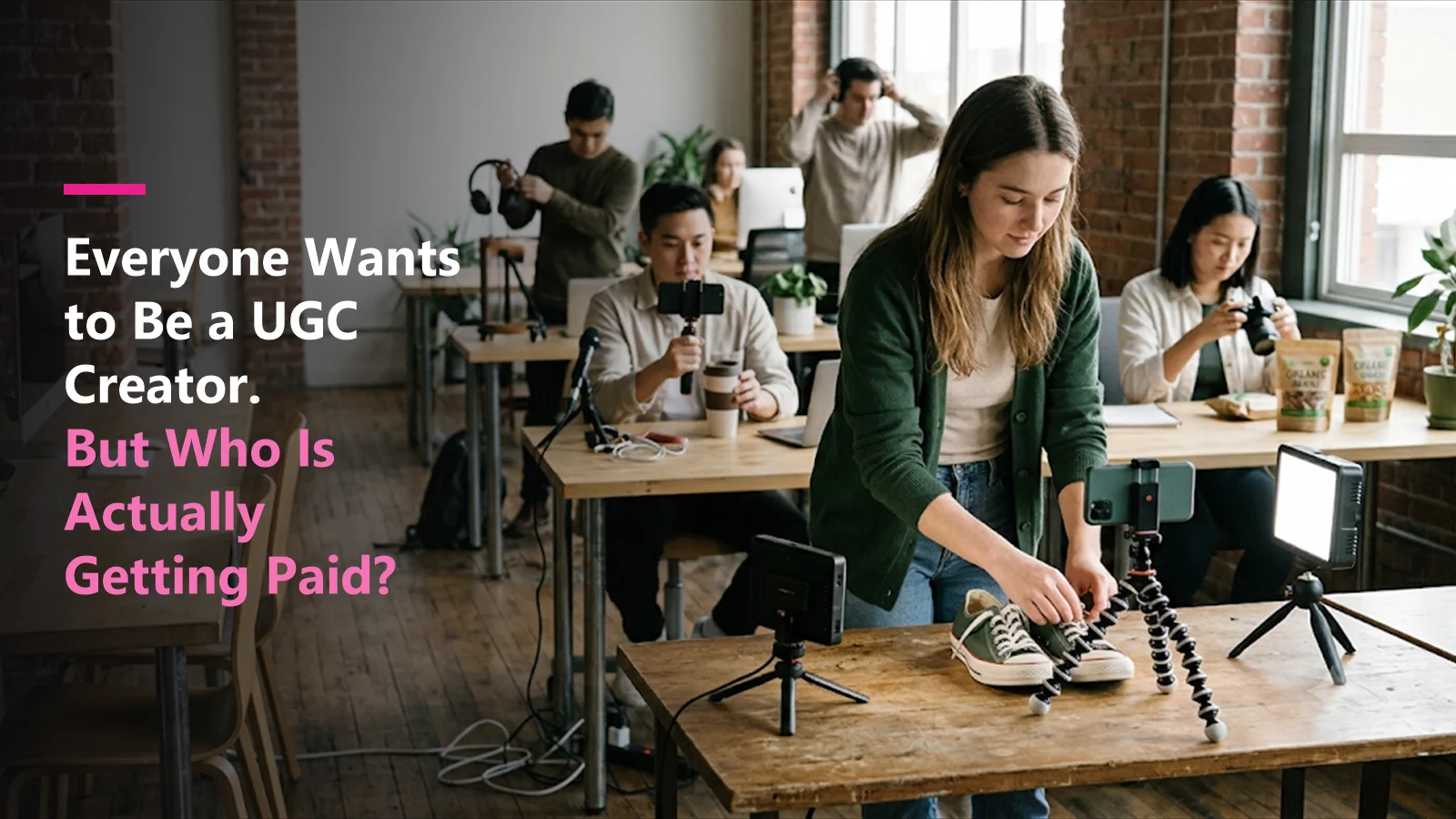
Everyone Wants to Be a UGC Creator. But Who Is Actually Getting Paid?
If you open Instagram today, you'll probably find multiple people giving you a blueprint on how to become a UGC creator. And honestly, it's not hard to see why so many people are getting into it.
In today's world, a creator doesn't necessarily need to worry too much about followers, having the perfect camera setup, fancy lighting or making every video look polished. You can pick up your phone, create a video around a product, and that's enough to get started. And that's exactly what makes UGC so appealing in the influencer marketing space.
But there's a catch.
Just because everyone can make UGC doesn't mean everyone is actually getting paid for it.
Brands have a lot of creators to choose from now. A lot. The market is crowded, and simply filming yourself using a product, talking about it and calling it UGC isn't really a differentiator anymore.
So, the question arises: who actually gets the money? And more importantly, when a brand has hundreds of creators to choose from, how does it decide who gets to showcase its product?
UGC Has Become Easier to Enter
Creating UGC content is appealing mainly because of how accessible it is. You don't need a huge following or a massive audience to get started. But that accessibility has also meant that everyone is now entering the same league.
Before UGC became such a big part of influencer marketing, brands were largely looking at followers, reach, visibility and the kind of community an influencer had built. The bigger the audience, the more people the brand could potentially reach through that creator.
UGC has changed that equation. Now, a creator can simply create a product demonstration, testimonial, unboxing or lifestyle video and hand that content over to the brand. The brand can then use it on its own social media, website or even in advertising. The creator doesn't necessarily need to post it to their own audience at all. This means a creator with a million followers can end up competing for the same UGC opportunity as someone with 800 followers.
That wall doesn't really exist anymore. And while that's great for creators because more people can enter the space, it also means the competition for each opportunity can be intense. The barrier to entry may be low. Getting noticed isn't.
Follower Count Isn't Always the Deciding Factor
This is one of the biggest differences between UGC and influencer marketing. If a brand hires an influencer, their audience is part of the product. With UGC, the content itself is often the product.
The brand is paying for someone who can explain a product without sounding like they're reading an advertisement, follow a creative brief and deliver content that the brand can actually use. That can mean appearing on camera naturally, but some briefs call for voiceovers, hands-only demonstrations or faceless videos instead.
That changes what makes a creator valuable. For UGC, brands are often buying the asset, not simply access to an audience, which is why a creator's position across follower tiers can matter less than it does in influencer marketing.
That doesn't mean followers are irrelevant. CreatorIQ's 2026 State of Creators report found that, among creators generally, earnings were more closely linked to follower count and views than to engagement rate. Some creators also bring both content production and distribution to the table. But when a brand is using the content on its own channels, follower count isn't necessarily the defining currency it is in traditional influencer marketing.
So, What Are Brands Actually Paying For?
A phone camera can capture a video. It can't automatically make that video good. That's where the difference between a beginner and a creator brands rehire becomes clearer.
Brands may pay for a combination of things: a strong hook, natural delivery, good product storytelling, clean visuals, useful B-roll, brief compliance and platform-native execution.
And then there's something less visible but equally important: reliability. Can the creator deliver on time? Can they understand feedback without needing five rounds of explanation? Can they produce three genuinely different concepts instead of making the same video three times?
There's also the question of purpose. A brief might say “Create a 30-second product video,” but that's only the execution. What is the video supposed to do: stop the scroll, explain a complicated product, build trust, address a customer objection, drive a click, or give a paid ad a new creative angle? A creator who understands that is doing more than producing footage. Brands don't simply need more videos. They need more useful videos.
None of this shows up on a follower count. It shows up in the content.
And Then There Are Usage Rights
This is the part newer creators often overlook.
A brand isn't always paying only for the time it took to film a video. It may also want permission to use that video in paid advertising, on its website, across different platforms or for an extended period. Those are different commercial rights.
For example, a creator might charge one amount to produce a video that a brand posts organically and another amount if the same video will be used in paid ads for six months. That distinction matters because the brand is getting more value from the asset. In other words, the video isn't always the whole product. The license can be part of the product too.
What Do UGC Creators Charge, and How Are They Paid?
There isn't one universal UGC rate. It depends on the creator, deliverable, market, niche, production requirements and usage rights. Published rate guides and marketplace figures vary widely, so treat any single number with caution, especially one drawn from a different country.
The more useful question may be how a creator is paid. Some campaigns offer guaranteed cash. Others offer gifted products, gifted-plus-paid arrangements or compensation tied partly to commission or affiliate performance. So when someone says, “UGC creators are making money,” there's another question worth asking: how many of them are actually receiving cash for each piece of content? That's a very different picture from simply counting creator opportunities.
The Gifted Product Problem
Getting a free product feels like a win when you're starting. And sometimes it can be useful. You get something to put in your portfolio. You get practice working with a brand. You might build a relationship that eventually leads to paid work.
But free products aren't the same thing as income. The growing popularity of UGC has created an environment where creators can produce a significant amount of content without necessarily building sustainable income from it. The more crowded the market becomes, the easier it is for brands to find someone willing to work for exposure or a product. For creators, that makes knowing the difference between an opportunity and a paid opportunity increasingly important.

The Bigger Problem: Everyone Is Starting to Look the Same
Scroll through enough brand content, and you'll start noticing the patterns: the same talking head, the same bedroom setup, the same “three reasons you need this” opening, the same exaggerated reaction, the same unboxing, the same line about how the creator “literally can't live without it.”
UGC became valuable partly because it didn't look like traditional advertising. But as more people learn how to make UGC, there's a risk that UGC itself develops a recognisable advertising style. And, once that happens, authenticity becomes much harder to manufacture.
How Creators Can Stand Out
A creator doesn't stand out because their video looks more polished. They stand out because their idea is better, and because it feels natural rather than like an ad trying to be UGC. Content that looks casual can be copied. Content that actually understands the audience is much harder to copy.
Take a skincare serum. One creator films the familiar version: a talking head, a list of three reasons, a big reaction. Another shows a real morning routine, names the specific skin concern she bought it for, and says honestly what it did and didn't change. Same product, same brief, but the second video gives a viewer something to believe.
That's a creative skill, and it becomes more valuable as brands have access to more creators. The creator who simply follows a template becomes easier to replace. The creator who can consistently find different ways to make the same product interesting becomes much harder to replace.

So, Who Is Actually Getting Paid?
Not necessarily the person with the biggest following. Not necessarily the person with the most expensive camera. And not necessarily the person who has posted the most tutorials about becoming a UGC creator.
The creators who are better positioned for repeat business are the ones who understand that they are providing a creative service, not simply filming a video. They know how to interpret a brief. They understand hooks. They can adapt their communication style to different audiences. They can make content that feels native to the platform. They deliver reliably.
And increasingly, they understand the commercial side too: usage rights, revisions, exclusivity and where their content will actually be used. That's the shift worth paying attention to. Brands aren't short of people who can make a 30-second video. They're looking for people who can make that 30-second video worth using.
The UGC Market Is Getting Bigger. That Doesn't Mean It's Getting Easier.
CreatorIQ's 2026 State of Creators report, based on a survey of more than 5,000 creators across 100 regions, found that 67% earned less than $10,000 annually from content creation, while 62% said it was not their primary source of income. These figures describe the broader creator economy, not UGC earnings alone.
At the same time, the market around creator content continues to expand. That sounds contradictory until you look at the other side of the equation. More brands are interested in creator content. More people want to become creators. More content is being produced. But the money isn't automatically distributed evenly across all of them.
The market can expand while competition for individual opportunities remains intense. And that brings us back to the question in the title. Everyone wants to be a UGC creator. But being able to make content is the easy part now. Getting paid consistently is where the real work begins.
The next phase of UGC may not be about who can make content. It may be about who understands why a brand needs that content in the first place. And that changes the creator's role entirely. They're no longer just someone holding a product in front of a camera. They're becoming part of the brand's creative process.
Frequently asked questions
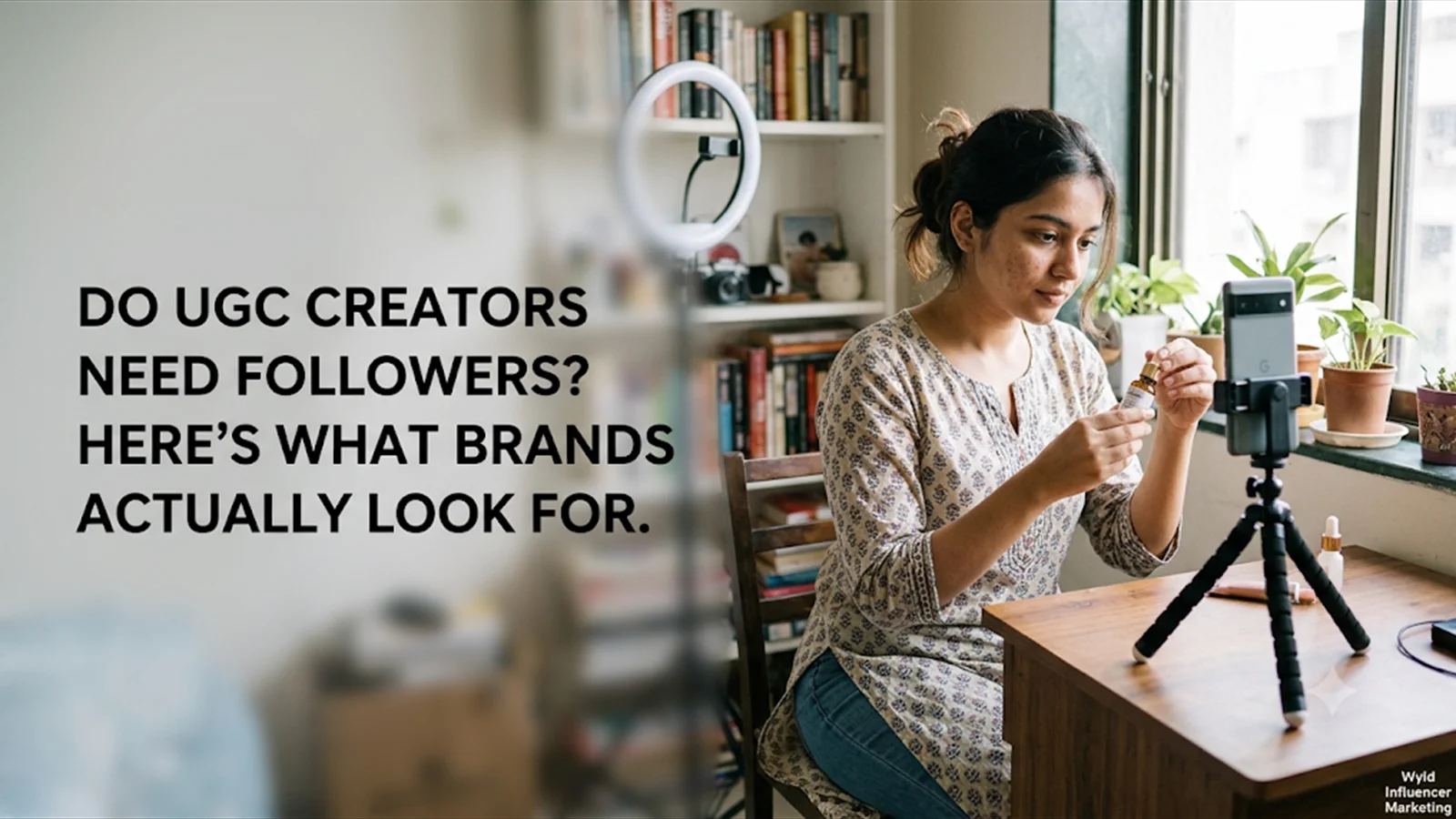
Do UGC creators need followers?
Not necessarily. Unlike traditional influencer marketing, UGC campaigns can pay creators primarily for the content they produce rather than the size of their personal audience. That said, a large following can still help, particularly when a brand also wants the creator to post the content.
Do UGC creators actually get paid?
Yes, but payment varies significantly. Some campaigns offer cash payments, while others offer gifted products, affiliate commissions or a combination, so it's worth checking what a campaign actually pays before you accept.
How much do UGC creators charge?
There is no universal rate. It depends on the deliverable, creator experience, usage rights, niche, market and campaign requirements. Treat any single published figure with caution, especially if it comes from a different country.
What makes a UGC creator valuable to a brand?
Brands can look for strong hooks, natural delivery, good storytelling, reliable communication, quality footage, brief compliance and the ability to create content that feels native to the platform. Commercial terms such as usage rights and exclusivity can also affect the value of a deal.
Is UGC still worth doing in 2026?
UGC remains an active opportunity, but the market is increasingly competitive. The low barrier to entry means having a phone and being comfortable on camera is no longer enough to guarantee consistent paid work. Creators who develop stronger creative, communication and commercial skills can differentiate themselves more effectively.
More from UGC & Content Marketing